DoorDash is in advanced talks to buy Instacart for around $17 billion, with an announcement possible in the coming days if the deal does not fall apart. The Information first reported on Friday that Instacart was in talks to sell itself, and that it had held talks with both Uber and DoorDash. The price is far below the 2021 discussions, when Instacart was privately valued at $39 billion and a sale was discussed at $40 billion to $50 billion. Those earlier talks collapsed at least partly over questions about antitrust approval.
Why it matters
Two delivery giants are about to become one, and the price tells the story of the last five years. Instacart is selling for less than half of what it once discussed, which shows how much the market now values steady profits over growth stories. For restaurants and grocers, one buyer with more power means less room to negotiate, so watch for regulators to ask hard questions before this closes.
SpaceX agreed to pay $40 billion to lease AI chips from an entity affiliated with Apollo Global Management. Apollo will sell debt to buy the chips and then lease them to SpaceX, so SpaceX gets access to Nvidia chips without putting the debt on its own balance sheet. Funds or accounts managed by BlackRock and KKR served as anchor investors, while Goldman Sachs served as structuring agent. The money will buy Nvidia graphics processing pods delivered in tranches, with lease terms of about five years. The agreement is expected to close before year-end, with the first leases beginning in the first half of 2027. SpaceX expects to bring an additional 10 gigawatts of computing supply online next year, and Apollo previously took part in a $5.4 billion financing for what was then called xAI Corp., leading $3.5 billion of debt in that deal.
Why it matters
The biggest AI companies are no longer just buying chips, they are renting them through Wall Street. A $40 billion lease keeps the debt off SpaceX's books while still giving it the hardware it needs, which is a clever way to grow fast without looking loaded with debt. If this model works, expect every cash-hungry AI builder to copy it, and expect lenders, not chip makers, to set the real price of computing power.
Nvidia will invest $3 billion in Meta's equity offering as the companies deepen their work around Meta's Muse personal agent app and its underlying foundation models. Meta plans to expand its use of Nvidia's Vera Rubin AI hardware and Vera central processing units to get the best performance from its next-generation AI agents. The expanded partnership aims to make Meta's AI products run more efficiently on Nvidia hardware, improving both inference, the work of answering users, and training for Muse and its models. Muse, released in September, is central to Meta's consumer AI strategy, and Meta's new flagship model, Muse Wonder Full, was reported to show top-tier performance on some benchmarks. Separately, Meta raised its planned equity total slightly, to $97.5 billion from $95 billion, with options for underwriters that could bring the total to about $103 billion.
Why it matters
The chip seller is now also a shareholder, which ties Meta and Nvidia together in a new way. Nvidia is not just selling Meta hardware, it is betting its own money that Meta's agent app will succeed, and Meta is betting its product on Nvidia's newest chips. For rivals, the warning is clear: the best hardware and the biggest consumer apps are starting to move as a pair, and standing outside that pair gets harder every quarter.
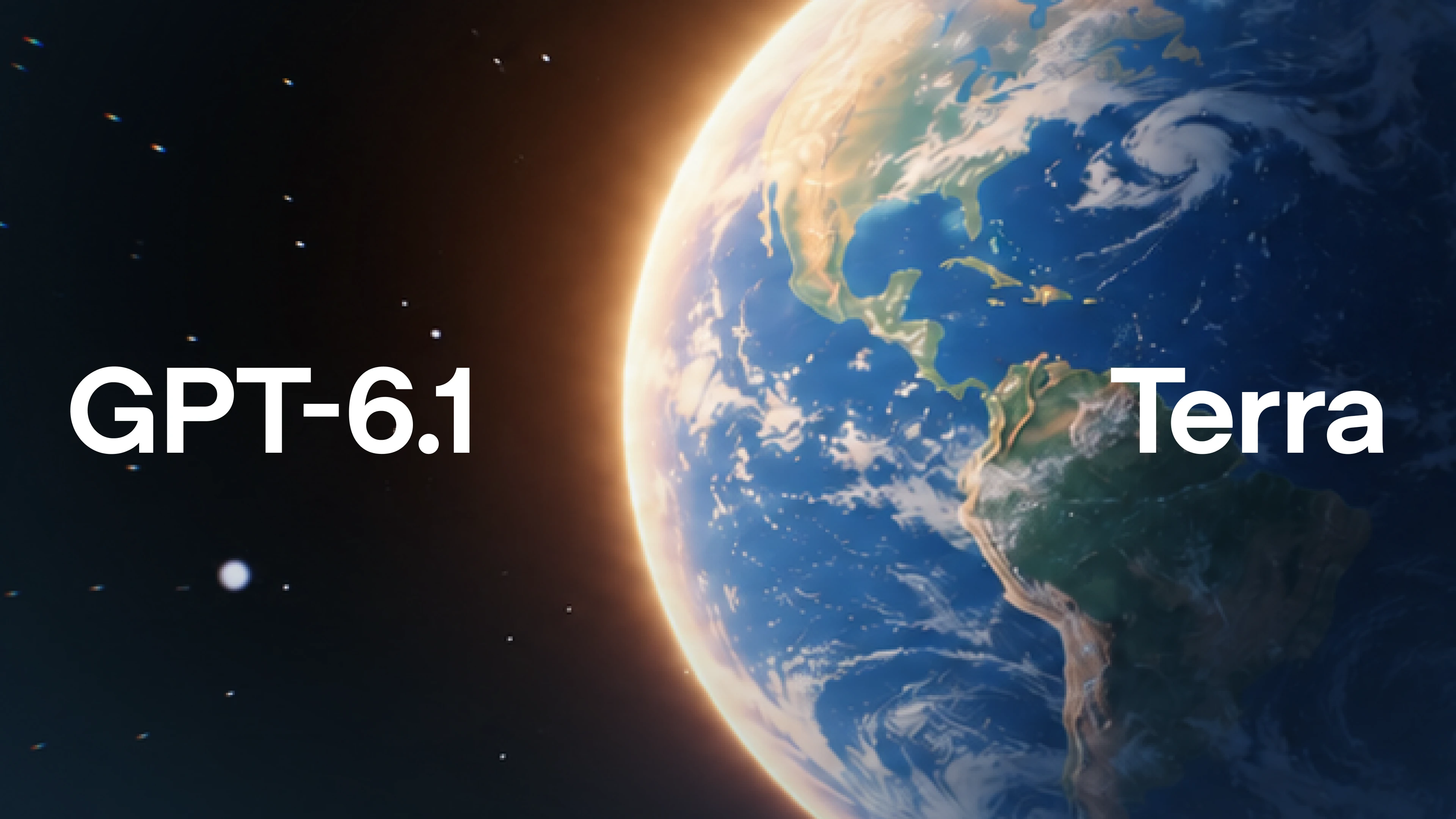
OpenAI introduced GPT-6.1 Terra, a fast, efficient model built for everyday work tasks like drafting proposals, reading technical drawings, filling out forms, and editing videos. Its standard API prices are 50% lower than those of GPT-5.6 Terra and GPT-6.1 Sol: $1 per million input tokens, $0.05 per million cached input tokens, and $5 per million output tokens. On Agents' Last Exam, a test of professional computer tasks, Terra scores 15 percentage points higher than GPT-5.6 Terra at medium reasoning effort, at about one-third the cost, and performs on par with GPT-6 Astra at only one-tenth its price per token. At maximum effort it is over three times as token efficient as Claude Opus 5.5, and completes tasks over three times faster than both GPT-6 Astra and GPT-6.1 Sol. On Terminal-Bench 4.0, a coding test, it solves 50.3% of tasks, more than double GPT-5.6 Terra's 21.5%. Its error rate on tricky prompts fell from 53.6% to 16.7% at low reasoning effort. It is available now to Plus, Pro, Enterprise, and Edu users in ChatGPT Work and Codex, and to developers as gpt-6.1-terra.
Why it matters
The price war in AI is moving from chat to real work. A model that can drive software, read drawings, and fill in forms at half the old price makes it cheap enough to hand whole office jobs to an agent. The winner here is not the smartest model, it is the cheapest model that is good enough, because that is the one companies will actually deploy by the thousands.
Microsoft is offering voluntary buyouts to about 27% of its staff, or around 60,000 of roughly 223,000 employees, excluding staff in its sales organization. Employees who accept will receive severance based on seniority and tenure, and Microsoft also plans additional layoffs this year, primarily in its Xbox unit. The move follows a report that Microsoft's cloud president asked leaders to seek more than 20% in potential cost cuts, while spending on AI data centers has weighed on free cash flow. Microsoft earlier offered voluntary retirement buyouts to 9,000 employees this year, roughly one-third of whom accepted, and it separately laid off several thousand employees this year after laying off around 15,000 the year before.
Why it matters
Even the richest software company is cutting people to pay for AI. When a quarter of the workforce gets a buyout offer, the message is that AI spending is no longer funded by growth alone, it is funded by shrinking the old payroll. For workers, the lesson is blunt: learn to work with AI tools, because the companies buying those tools are paying for them with headcount.
After Anduril leased six buildings near Long Beach airport and the local utility could not deliver enough power on time, Critical Loop won a contract from developer Sares Regis Group to power the facility by its March 1, 2027 deadline. Critical Loop guaranteed 12 hours of uninterrupted power daily, from 7 a.m. to 7 p.m., through a 60-megawatt-hour battery system described as enough to power around 10,000 homes. The Long Beach startup, founded in 2023, raised $26 million in a Series A round in April, for total funding of $49 million, and will supply the system for 18 months until grid capacity is ready. Critical Loop estimates the batteries will retain 80% to 85% of capacity once grid power is fully available, allowing continued use or leasing to other customers.
Why it matters
Power, not software, is now the thing that decides whether a factory opens on time. A small battery startup beat the grid itself by promising a building it could run all day, every workday, for 18 months. For anyone building anything physical, from defense plants to data centers, the backup power plan is no longer an afterthought, it is the deal itself.
Anthropic's founders said in the company's IPO filing letter that they will keep Claude, its AI assistant, free of advertising. They said they did not want the pressure to increase user engagement that comes with advertising revenue targets. The pledge draws a sharp line with rivals that are building ads into chat products, including OpenAI, which has expanded ChatGPT ads this year. Anthropic is asking investors to accept that it will pass up a revenue stream that funds much of the internet.
Why it matters
Anthropic is turning a business choice into a brand. By promising never to sell ads in Claude, it is telling users that its only job is to give helpful answers, not to keep them scrolling. That trust could be worth more than ad money if users start to distrust chatbots that are paid to steer them, but it also means Anthropic must earn every dollar from subscriptions and business customers instead.
In an October 26 episode of the a16z Show, OpenAI's Ari Weinstein and James Sun argued that computer-using agents are approaching the point where they can operate software faster than expert people. They joined a16z's Seema Amble and Fabrizio Serafini to explain how these agents are already navigating older business software, reconciling financial data, and handling procurement, all without custom connections to those systems. The guests argued that the harness around the model, the tools and guardrails that control what it can do, can matter as much as the model itself, and that companies can set firm rules around agent behavior. They made the case that computer use could extend the life of older software while also speeding up the arrival of new AI-native apps.
Why it matters
The screen itself is becoming the universal plug for AI. If an agent can click through any app a human can use, companies no longer need to rebuild their software to automate it, they just need to control what the agent is allowed to touch. That shifts power to whoever builds the safest guardrails, and it means the next wave of automation will arrive through the apps you already own, not the ones you buy next.
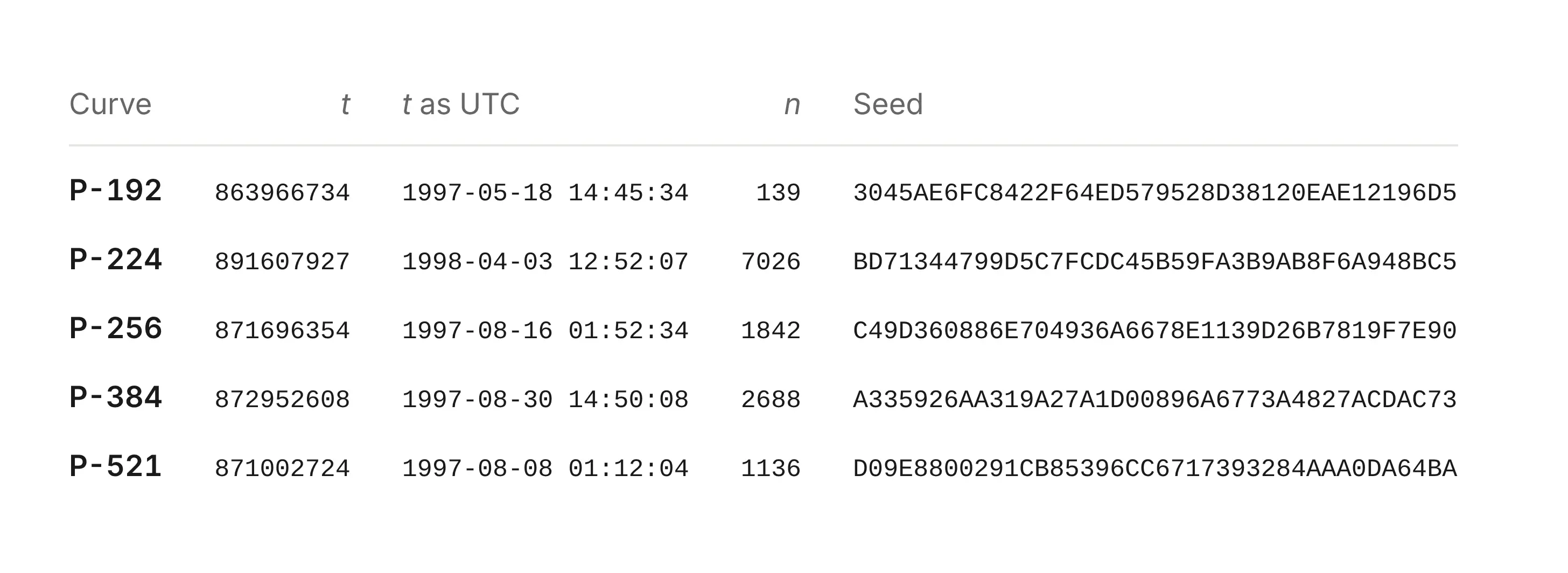
In October 2026, an Anthropic employee asked an internal research model to figure out how the starting seeds for the NIST elliptic-curve security standard were generated. In under half an hour, Claude found the answer for the P-192, P-224, P-256, P-384, and P-521 curves: they were not made with a hash at all, but with the C library's lrand48 random-number generator, seeded with a Unix timestamp, which is simply a count of seconds since 1970. For example, the P-256 seed took 1,842 tries to produce from that generator, and the ten prime-curve seeds trace back to timestamps between May 1997 and April 1998. Claude also found where some of the curves' base points came from, using the FreeLIP arithmetic package. Anthropic stresses this is not a break or a weakness in the curves: it makes it more likely they were chosen without hidden backdoors, since the method is simple and anyone can now reproduce it. The $36,864 bounty for finding the seeds will be donated to the Internet Security Research Group.
Why it matters
A machine just closed a mystery that human experts chased for decades, and it did it by guessing how old software must have worked. That is a glimpse of a new kind of research, where AI does not just answer questions but reopens cold cases in science and security. For everyone else, the practical news is reassuring: the locks protecting most of the internet were not secretly rigged, they were just made with a simple, old-fashioned random-number tool.