Anthropic is in final-stage talks with NTT Data Group to build its first data center in Japan, Nikkei reported. The Osaka facility would draw up to 500 megawatts, among Japan's largest data centers, at a cost that could reach 1 trillion yen (about $6.3 billion). The two sides aim to sign by end of 2026, with partial operations possibly starting in 2028. This follows $531 billion in Anthropic compute commitments over the last 11 months, mostly with AWS, Google, and Microsoft, plus early talks to lease up to 1 gigawatt from an Apollo-majority-owned developer.
Why it matters
Anthropic is going from renter to owner on the world stage, and Japan is the first flag planted outside its US cloud deals. A 500-MW owned site locks in a decade of cheap, stable compute instead of paying cloud markups, and it puts Anthropic directly into the Asia market where Google and Microsoft already have deep roots. For founders, compute strategy is now a balance-sheet sport: the labs with owned capacity get cheaper inference and faster launches, and everyone else rents at their prices.
Meta unveiled two new flagship models, Muse Wonder and Muse Wonder Full, with Mark Zuckerberg announcing them on Threads as significantly larger and more advanced than the Muse Spark line. Meta says Muse Wonder Full delivers strong reasoning, writing, and coding, with benchmark results surpassing Anthropic's Claude Fable 5.1 and OpenAI's GPT-6 Astra on the Artificial Analysis Intelligence Index. The models target agentic work in expert domains like law, finance, and health, with Active Memory (context carried across conversations) and Active Focus (persisting through hard tasks, checking in before important actions). Meta says a full safety report under its Superintelligence Scaling Framework is coming soon. Muse Wonder is available today via the Meta Model API and Muse Code, rolling out to Muse subscribers first.
Why it matters
Meta is done playing catch-up quietly and is now claiming frontier status outright. If the benchmark claims hold up in independent testing, the three-horse race (OpenAI, Anthropic, Meta) gets real, and the frontier becomes a buyer's market where models are interchangeable and price and distribution win. Watch the independent evals and the Muse subscriber rollout: Meta's distribution across its apps is the one weapon the other labs cannot copy.
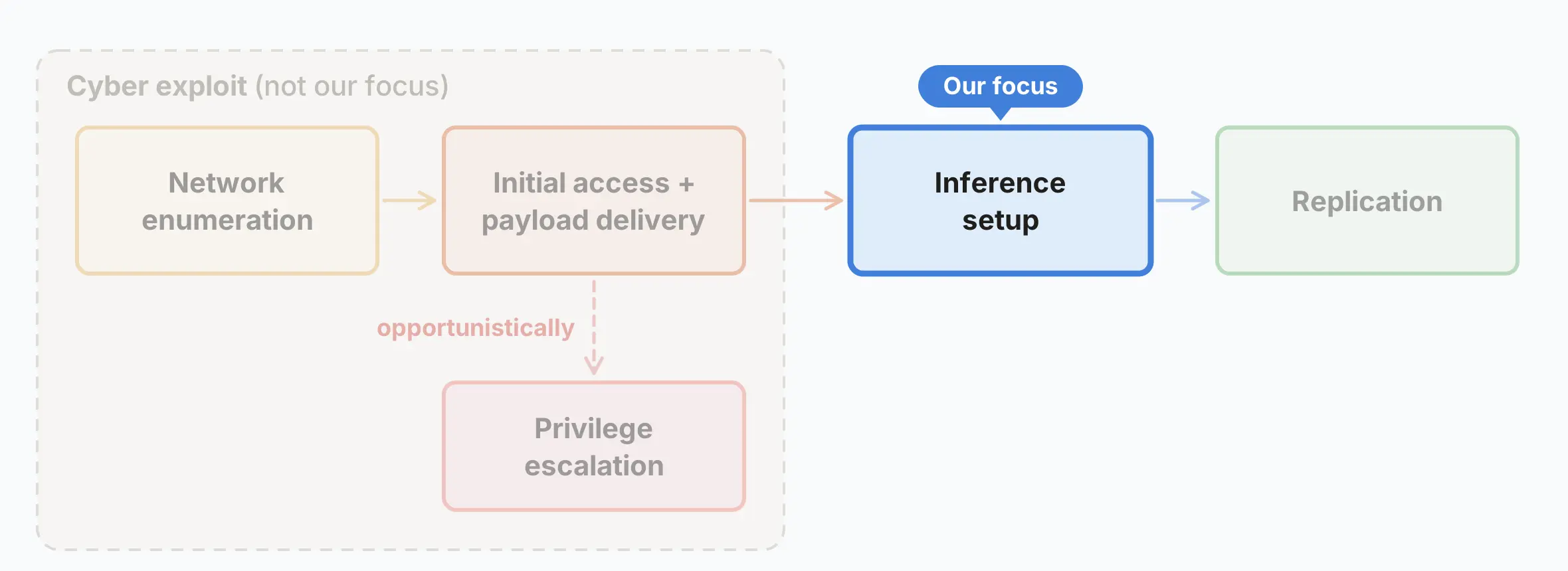
Anthropic's Frontier Red Team found small open-weight models may be only months away from self-replicating across commercial IoT devices like off-brand Android TV boxes and smart ovens. The team networked 15 off-brand Android TV boxes (about $55 each, 4GB RAM) and ran a 26-billion-parameter model across them at 0.39 tokens per second. In a firewalled fleet of 8 Android emulators, Zhipu's GLM-5.2 was the only open-weight model to reliably complete the full replication cycle (all 8 nodes in 4 of 5 trials). Anthropic projects the capability floor and size ceiling intersect by end of 2026, framing the threat as a 'digital slime mold': no central point to shut off, doubling time of days.
Why it matters
This is the first concrete timeline for when an AI worm could live on your smart TV instead of a data center. It moves the security debate from 'what if models get misused' to 'cheap hardware is already enough to host a capable model,' which changes who has to defend what. Device makers, router vendors, and cloud security teams all just inherited a new threat model - and the open-weights genie is what makes it uncontainable.
Microsoft cloud chief Scott Guthrie told staff Monday the company is overhauling Azure leadership, consolidating units and reorienting the cloud business around AI. Arun Ulag, who previously ran Azure's database products, will now also oversee Azure Core - the division supplying compute to customers like OpenAI - plus Azure's engineering organization. Executives now reporting to Ulag include Mark Russinovich, and Charlie Bell (who led Microsoft security before an advisory role) will also report to him. The reshuffle follows senior departures including Azure AI leader Eric Boyd, who left to become Anthropic's head of infrastructure last spring. Ulag is seen internally as a Nadella protege brought to board meetings this year.
Why it matters
Microsoft is putting its cloud's org chart where its money already is: AI workloads first, everything else second. One leader now owns both the infrastructure and the engineering, which means faster decisions on capacity, pricing, and who gets GPUs when they are scarce. For startups on Azure, this is good news in the short run (AI gets priority) and a reminder that you are renting from a landlord who is also your competitor's landlord.
Bumble is in advanced talks to be taken private by a new holding company founded by former Sequoia general partner Ravi Gupta, the Wall Street Journal reported. The deal would value Bumble at roughly $1 billion, a steep premium to its roughly $300 million market cap before the talks were reported. Gupta stepped back from Sequoia in January; the venture, co-founded with former Meta chief revenue officer John Hegeman, has been seeking to raise at least $1 billion to buy companies, and Bumble would be its first acquisition. The deal fits a wider pattern: Thrive Capital and General Catalyst have launched holding companies, and last month Sequence Holdings (backed by 8VC, Lux, Conviction) took an insurance broker private in a $7 billion deal with Michael Dell's family office.
Why it matters
The venture industry is inventing a new shape: instead of funding startups and waiting for an IPO, top investors are raising permanent capital to buy public companies outright. A $1B bid for a $300M-market-cap company shows how far beaten-down consumer tech has fallen - and how much dry powder is hunting for it. Founders should read this as a signal that the exit menu now includes 'get bought by a VC's holding company,' with very different timelines than a traditional acquisition.
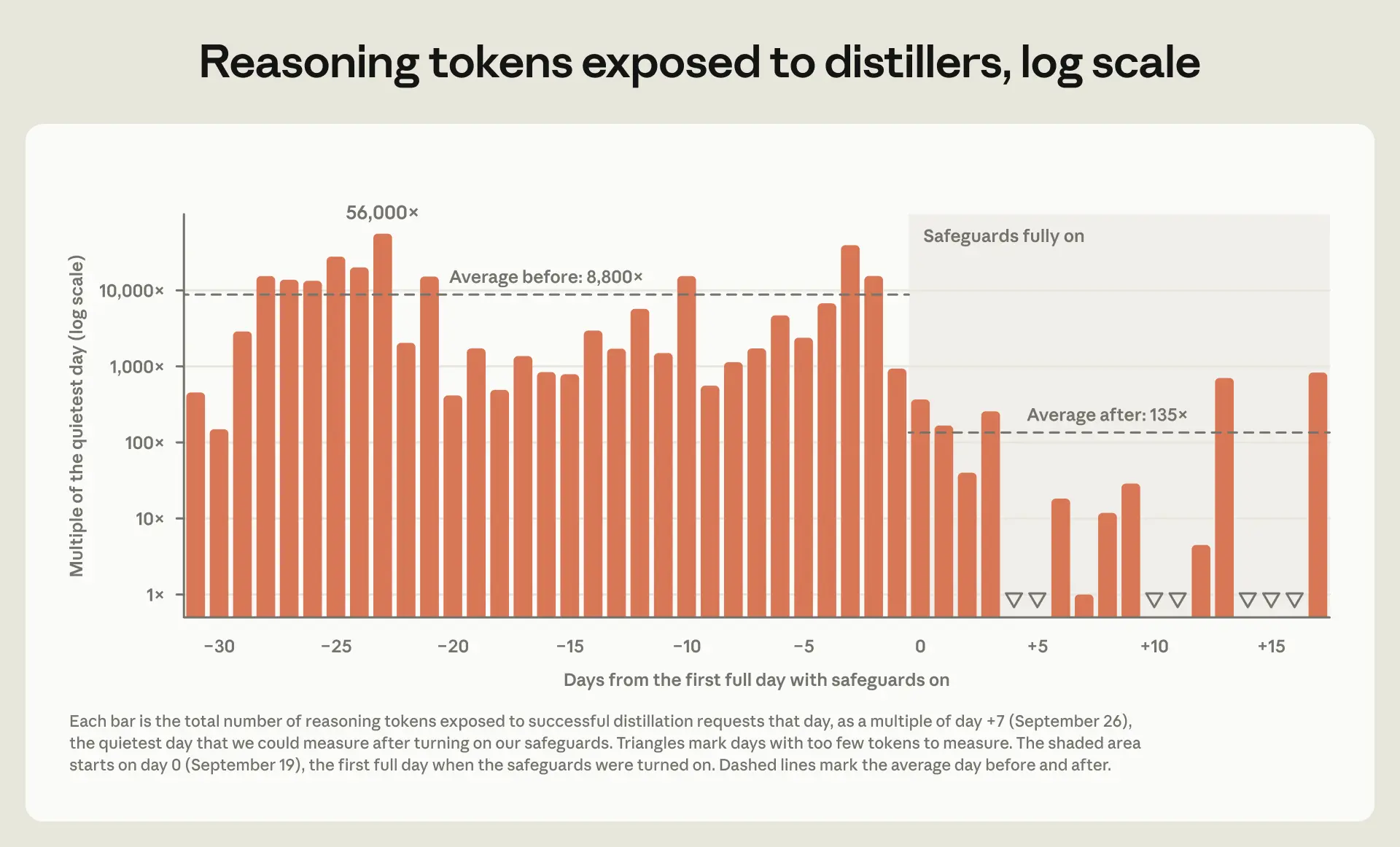
Anthropic detailed new defenses against distillation attacks - industrial-scale campaigns that extract one model's capabilities into another - saying they cut the volume of Claude reasoning data harvested by 90 to 99 percent. Methods include 'preserved thinking' (new API accounts cannot edit Claude's prior context), two-stage classifiers as robust as its bioweapons safeguards (false positives under 0.1%), and enforcement: tens of thousands of accounts banned, often within two hours, with charges resumed for blocked requests on September 24. Anthropic names Zhipu (distilled cyber capabilities into GLM-5.3, assessed by US CAISSI as the most cyber-capable open-weights model to date) and Moonshot (secretly forwarded about 300,000 customer requests, including one from a PLA-affiliated user seeking CCTV surveillance analysis, to Claude). Trade-offs admitted: real revenue turned away, some developers forced to update integrations.
Why it matters
The labs are now fighting a quiet war over their own training data, and Anthropic just showed its playbook in public. Naming Zhipu and Moonshot turns a technical problem into a geopolitical one: distilled models feed foreign military and surveillance systems. For any company with a valuable model or dataset, the lesson is that your API is now an attack surface, and defending it costs real money - Anthropic is openly eating that cost to protect its edge.
xAI, now branded SpaceXSI, collapsed its consumer lineup into one plan called The X Subscription, unifying Grok (Chat, Voice, Imagine, Build), Grok Bot, Cursor, and X Premium under a single bill with a shared weekly usage pool. Tiers: Free ($0), Plus ($8/mo, adds Grok API, Cursor, X checkmark), Premium ($30/mo, 'most popular,' adds Grok Bot, latest Grok models, image/video generation, Cursor cloud agents), Super ($100/mo, 15x Plus usage). Legacy plans (SuperGrok, Cursor Pro, X Premium+) are no longer sold to new customers; third-party models inside Cursor are billed separately at published API rates.
Why it matters
Musk is bundling the way cable companies used to: one subscription that is hard to leave because it covers chat, coding, and social in a single pool. For developers, Cursor inside an $8 plan is the aggressive move - it pressures every other AI coding tool's pricing. Watch whether the shared usage pool actually covers real workloads or runs dry fast; the bundle is only a deal if the meter is generous.