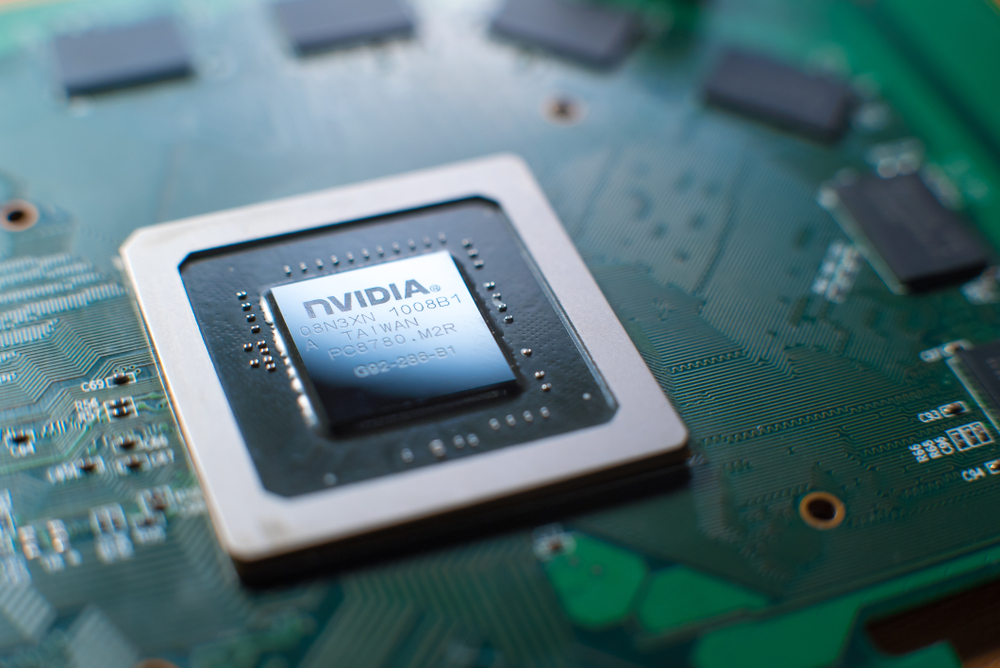
Nvidia inked more than $140B of deals in two months, including a $105B credit guarantee, and held nearly $100B in equity investments plus $25B in future commitments as of late July. Stripe beat Nvidia to OpenRouter with an $8B bid; other moves include buying Hugging Face for $12.9B (over 80x its $150M annualized revenue), a $6B license-and-hire from Poolside for its Nemotron open models, a planned ~$3B into Perplexity at a $35B pre-money valuation, and ~$2.5B talks with Thinking Machines Lab. Next targets: robotics, self-driving, and AI that runs locally on devices; Huang convened Blackstone, Apollo, and Goldman Sachs to finance $500B of Nvidia hardware, offering to backstop up to 25%.
Why it matters
Nvidia is turning chip demand into ownership across the whole stack, so every dollar of AI spending flows through its balance sheet twice: once as a chip sale, once as equity upside. The warning signs sit inside the same story: three customers drove 44% of sales, credit-default spreads widened in August, and even Nvidia loses when the asset is distribution, not silicon. If your startup touches inference or local AI, expect a call from Huang's corp-dev team; price accordingly.
SpaceX is raising $40B, roughly $10B in bank loans plus $30B in investment-grade debt, to buy Nvidia chips, with the deal expected to close in 2027. The raise funds an expanding compute-leasing business: SpaceX burned $25B in the first half of 2026, counts Anthropic as a customer with agreements worth up to $84.5B through 2029, and committed on its first post-IPO earnings call to use Nvidia chips exclusively.
Why it matters
The rocket company has become a debt-funded GPU landlord, and its anchor tenant is a foundation-model lab. When one balance sheet holds rockets, chips, and models, compute stops being a cost and becomes the product. Watch who SpaceX leases to next: its customer list is a map of who cannot get enough Nvidia supply anywhere else.
Paramount Skydance completed its $110B purchase of Warner Bros. Discovery, creating a combined company called Skydance that owns the Warner Bros. and Paramount studios, HBO Max and Paramount Plus, CBS, and cable channels including CNN, Discovery, MTV, Nickelodeon, and TBS. It starts life with $79B in debt, financed partly by $47B in equity raised at $12 a share, well above Paramount's $9.78 Monday close; the Ellison family and Redbird Capital hold the only voting shares.
Why it matters
The decade's biggest media deal closes with a debt anchor, so cost-cutting comes first and content libraries are the prize. Fewer, bigger buyers for premium content means AI video startups face harder distribution deals and fewer acquisition exits. If you sell into Hollywood, your customer list just shrank.
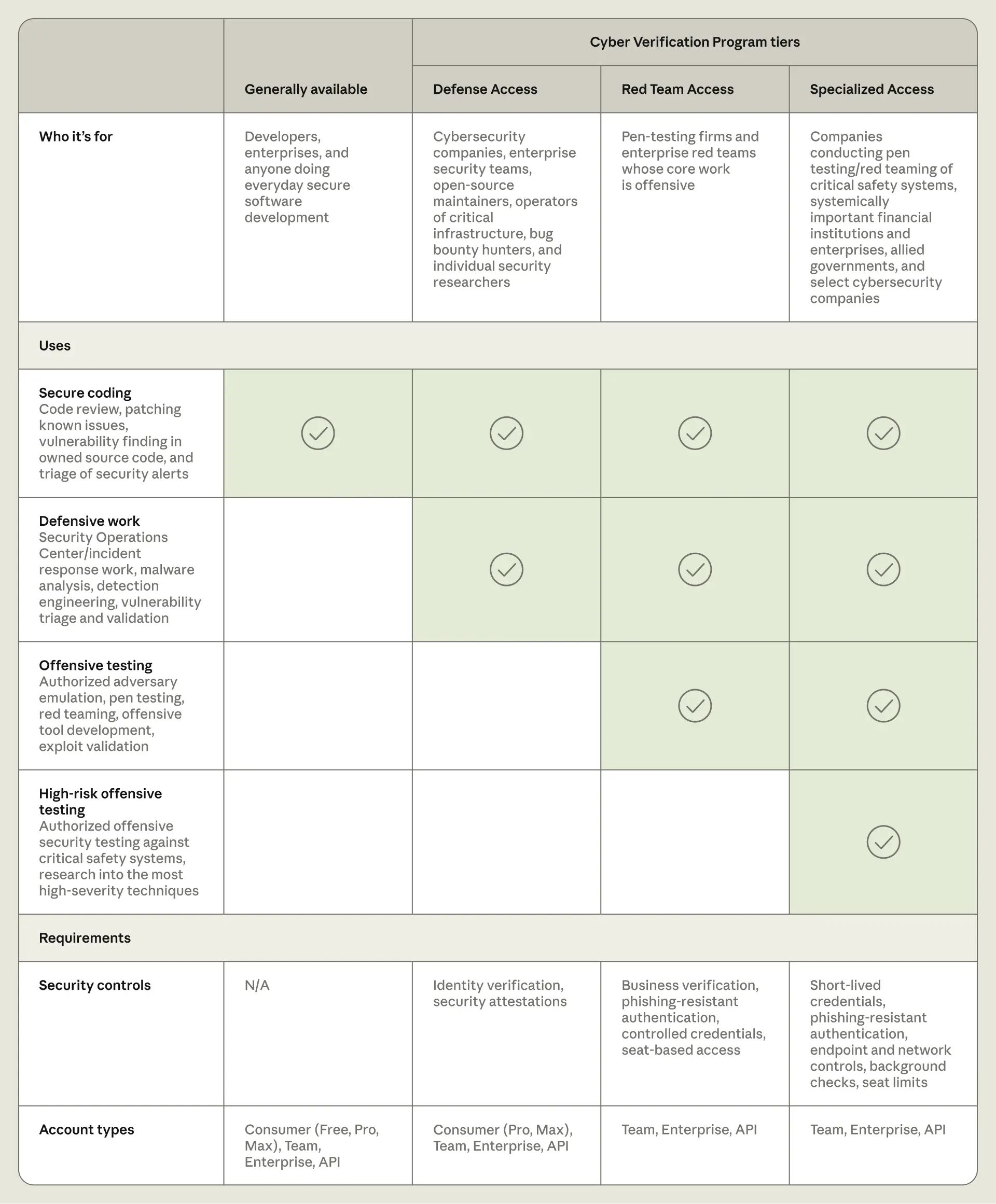
Anthropic merged Project Glasswing into an expanded Cyber Verification Program with three tiers - Defense, Red Team, and Specialized access - each unlocking its most capable models, including Opus 5.5, Sonnet 5.5, and Mythos 5.1. Partners found at least 129,000 verified software vulnerabilities between April and July, plus 5,500 from Anthropic's own open-source scans, with more than 33,000 rated critical or high; the company says the true impact is at least five times higher. On its CyScenarioBench test, Defense-tier safeguards blocked 46 of 50 attack trials, while the Red Team tier completed 34 of 50, matching the model's unsafeguarded success rate.
Why it matters
Anthropic is arming defenders with the same weapons it withholds from everyone else, because an open-weight model from China's Zhipu just crossed the autonomous-cyberattack line. Restriction failed; vetting is the new safety model. If you run a security team and do not apply, you are choosing to fight tomorrow's attackers with yesterday's tools.
OpenAI released a GitHub repository of new mathematical results produced by an unreleased internal frontier model, with many proofs formalized in Lean so computers can check them, plus 10 published summaries of the model's reasoning. Each result used roughly three hours of ChatGPT Pro thinking compute; the release was developed with the independent Advisory Group on Mathematics and AI at the Institute for Advanced Study, and OpenAI says it will fund workshops and conferences around the results. The company also says it is working to responsibly release the model that produced them.
Why it matters
OpenAI is answering mathematicians' skepticism with checkable proofs instead of claims. Three hours of compute per result turns machine mathematics into a budget line, not a moonshot. Labs are no longer just training on human knowledge; they are manufacturing it, and peer review will have to change to keep up.
OpenAI partnered with Ironclad, its first software-company research partner for computer use, turning 11 real contracting workflows - NDAs, procurement approvals, reusable legal clauses - into training tasks, each graded on 8 to 50 criteria. Using synthetic training tasks and reinforcement learning inside hosted Ironclad environments, GPT-6 Astra scored 55.0% versus 41.6% for GPT-5.6 Sol, a 32% improvement, while estimated time per attempt fell from 37.0 to 19.2 minutes; an internal model reached 63.7%. OpenAI is now inviting more software companies to bring workflows their agents still fail at, with test environments and grading criteria.
Why it matters
Agent benchmarks moved from toy tasks to real business software, and scores jumped a third in one generation. The playbook is public: bring a failing workflow, a sandbox, and a rubric, and the lab trains the failure out of the next model. If your software category is not in this program, a competitor's workflow is becoming the training data instead of yours.
Former a16z general partner Anjney Midha and ex-Google, Apple, and Nvidia executives launched National Compute to rent out idle AI server capacity at US and allied cloud providers to startups and smaller companies. Companies renting servers they do not fully use have committed 750 megawatts of capacity to the pool, hardware that would normally cost tens of billions a year to rent; Midha claims more than $5B in customer reservations. The founders have not finalized the structure or business model and plan an academic paper this week, with Midha's earlier company AMP assembling a consortium to run it.
Why it matters
When the answer to the GPU crunch is Airbnb for idle servers, the shortage is real and the big clouds are hoarding. The sharp insight is that large customers reserve far more than they use, so part of the 'shortage' is an allocation problem. If the pool works, spot GPU prices fall and the neoclouds lose pricing power; if it does not, it still proves demand is outrunning every buildout.
Atlassian and OpenAI expanded their 2023 partnership to bring the GPT-6 family, including Astra and the 5.6 series, across Atlassian's platform and its Rovo AI, which pairs OpenAI models with Atlassian's Teamwork Graph, a context layer mapping people, projects, documents, and decisions. More than 3,000 Atlassian developers already use Codex, new MCP server connectors link ChatGPT and Codex to enterprise data under existing permissions, and deeper Jira integrations for assigning work to agents and tracking results are in the works.
Why it matters
The project-management layer is becoming the agent's memory. Whoever owns the map of how work actually flows decides which agent gets hired. Atlassian is renting the models while owning the context, which is the right side of the trade. Every enterprise SaaS company should ask what its own context graph is worth before someone else wires agents into it.
HubSpot is cutting 660 employees, 7% of staff, in a restructuring that removes management layers and reorganizes product teams; CEO Yamini Rangan says it is not cost-cutting and does not stem from AI replacing human work. Peers Salesforce, ServiceNow, and Atlassian have also cut staff this year, and HubSpot shares are down more than 40% since January. The Information notes HubSpot's SMB customers may be more likely to 'vibe code' their own CRM than large enterprises with compliance requirements.
Why it matters
When a SaaS CEO must deny AI caused the layoffs, the market has already rendered its verdict. HubSpot's real exposure is its customer base: small businesses can now build their own lightweight CRM instead of buying one. Per-seat software is being repriced in real time, and headcount is the adjustment valve. Watch which SaaS companies cut next; the pattern is the story.
Menlo Ventures partner Venky Ganesan, a three-time Midas List investor whose portfolio includes Anthropic, Lovable, Legora, and Higgsfield, debates whether seed investing can work without a $1B fund, whether ownership and entry price still matter when exits can reach $1T, and whether reported AI revenue numbers are real, including the red flags to watch. The episode also covers tranched rounds, faster investment cycles as a warning sign, a coming M&A wave, and whether private equity faces an AI reckoning.
Why it matters
One of venture's sharpest is saying out loud that AI revenue may not be real and seed may be structurally broken. The bar for 'real' revenue is about to rise, and milestone-based tranched rounds are the new normal. If your numbers would not survive his red-flag checklist, fix them before your next raise. LPs should listen twice.