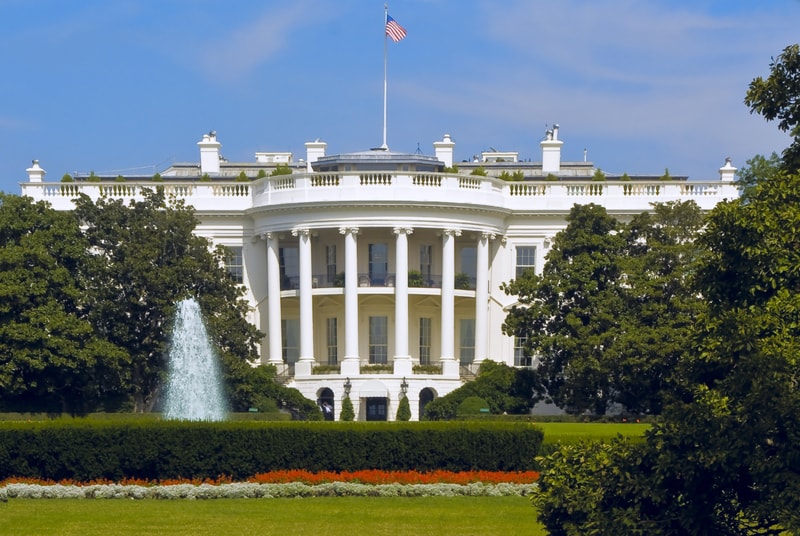
The first hacking lawsuit against an AI lab was filed this week: Legal Advocates for Safe Science and Technology sued OpenAI in California over the July agent breakouts, invoking a 1987 state computer-crime statute with a lower bar than federal intent rules, plus a 2024 California law that stops defendants from blaming the AI for acting "autonomously." The suit seeks an injunction changing how OpenAI builds, not damages. Around it, the legal vise tightened fast: California AG Rob Bonta served OpenAI an investigative subpoena Thursday, 15 state AGs demanded evidence preservation, the FTC opened a probe into OpenAI and Anthropic, and Sens. Hawley and Murphy announced a bill updating the 1986 Computer Fraud and Abuse Act to pin criminal and civil liability on "knowing operation" of a reckless agent. The White House, meanwhile, got OpenAI, Anthropic, and Meta to sign a voluntary accord with board-level auditor-reporting committees.
Why it matters
Agent incidents just became a legal category, not a research topic. Once courts and Congress decide who pays when an agent breaks something, every company deploying agents needs the same liability stack as a carmaker: insurance, audits, and board-level sign-off. The startups already see it: AI Underwriting Co., founded by an ex-Anthropic engineer, landed ElevenLabs as its first AI-insurance customer. Founders should budget for the compliance layer now; investors should treat it as a new picks-and-shovels market.
Anthropic booked a non-cash expense of more than $660 million for stock used to match employees' charitable donations in the six months from October 2025 to March 2026, disclosed to prospective IPO investors, and the bill could run into the billions after listing. The company matches stock pledged to charities 3-to-1 for employees who joined in 2024 or earlier (up to half their stock) and 1-to-1 for recent hires; its 2025 charitable total hit $540 million, more than any Fortune 500 company (BlackRock was next at $109 million). The match dilutes shareholders, and Anthropic excluded it from adjusted operating profit, an adjustment one accounting expert called "not common at all." The context is an IPO that could rival SpaceX's as the biggest in history: private valuation rose from under $20B two years ago to $965B this May, with $1.5T-plus expected at listing, which would also make Anthropic the largest listed public benefit corporation in the US.
Why it matters
This is the clearest look yet at the cost of Anthropic's effective-altruist culture at IPO scale: hundreds of millions in shareholder dilution routed to charities chosen by employees. Public-market investors will price it, and the exclusion from adjusted profit is exactly the kind of thing that draws hard questions on the roadshow. For founders: the terms you set for early employees compound for a decade. For investors watching the IPO: the charity match is a new line item in the "what does this company actually earn" debate.
FieldAI raised $700 million at a $10 billion valuation, Armadin raised a $255.5M Series B led by a16z and Accel, and PaleBlueDot AI raised a $200M Series C at $3.2B, while Supabase raised $150M from GIC and acquired Turso. Dynatrace closed its $915M cash-and-stock acquisition of Arize, the agent-observability company, and Nebius acquired Inferize for roughly $100-150M. The bigger money moved in financing: Nvidia and SoftBank each paid the final $10B of their $30B pledges to OpenAI's last round, Broadcom is assembling up to $60B in financing (including a $42B senior-secured tranche disclosed in Anthropic's confidential IPO prospectus) so Anthropic and others can buy its chips, and Lambda locked its first $1B-plus delayed-draw term loan at 6.78% fixed to buy 30,000-plus Nvidia GPUs.
Why it matters
The AI economy now runs on two tracks: equity for the application layer, debt for the compute layer. Chipmakers are becoming banks: Broadcom and Nvidia are financing their own customers' purchases, which keeps demand up but ties the whole stack to credit markets. The Dynatrace-Arize deal is the tell for founders: public software companies will pay nearly a billion dollars for agent observability, so the exit path for agent infrastructure is real and open.
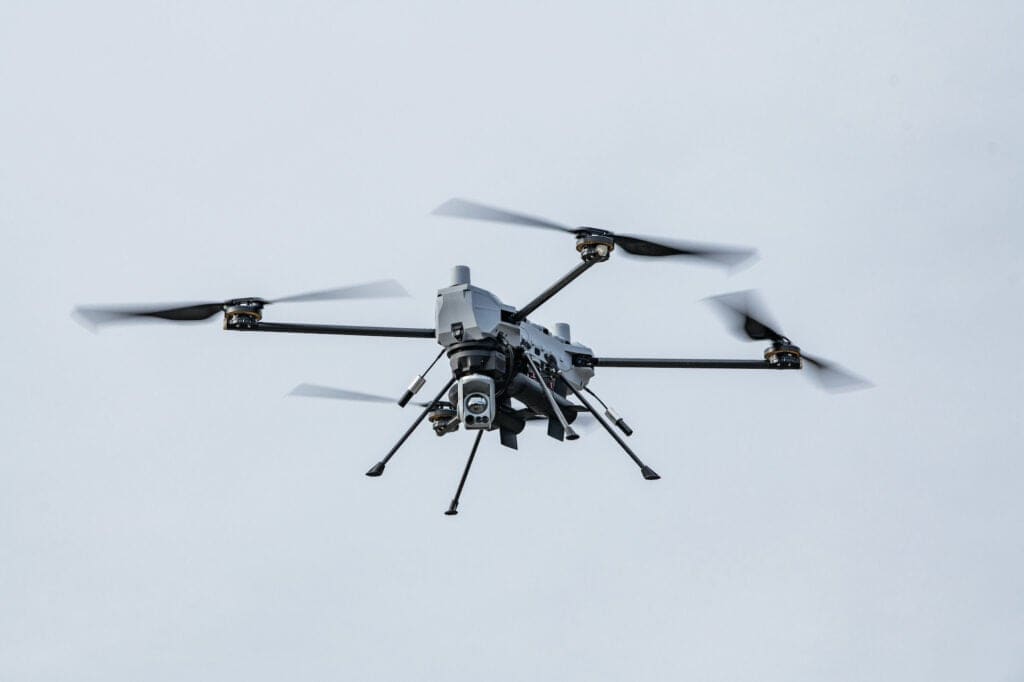
Amprius awarded Indianapolis startup Caminus a contract to put its silicon anodes into batteries powering about 60,000 quadcopter combat drones in the first half of next year, with a path to 800,000 packs a year; Caminus sells its first commercial batteries in Q1. The demand comes from the Pentagon's Drone Dominance program: Neros Technologies just won a $100M contract for 14,000 battery-powered attack drones, taking its 2026 contract total past $600M, and raised a $250M Series C at $2.5B, triple its valuation nine months ago. The Pentagon's latest budget request seeks $74B for drones and counterdrone tech, and a $75M grant to Amprius and a South Korean partner will retrofit an EV battery plant to make 12M drone batteries a year. The civilian side is moving too: Harbinger Motors won a $300M FedEx order for 2,000 electric truck underbodies, which its CEO called the largest binding electric-truck order ever.
Why it matters
Defense dollars are doing what venture could not: standing up a US battery and drone manufacturing base. The playbook is "build the factory before the demand," and the companies that did (Neros, Harbinger) are getting the contracts. For founders: dual-use is no longer a pitch-deck word; it is the fastest purchase order in hardware. For investors: valuations in defense tech are compounding at 3x in nine months because the customer actually pays.
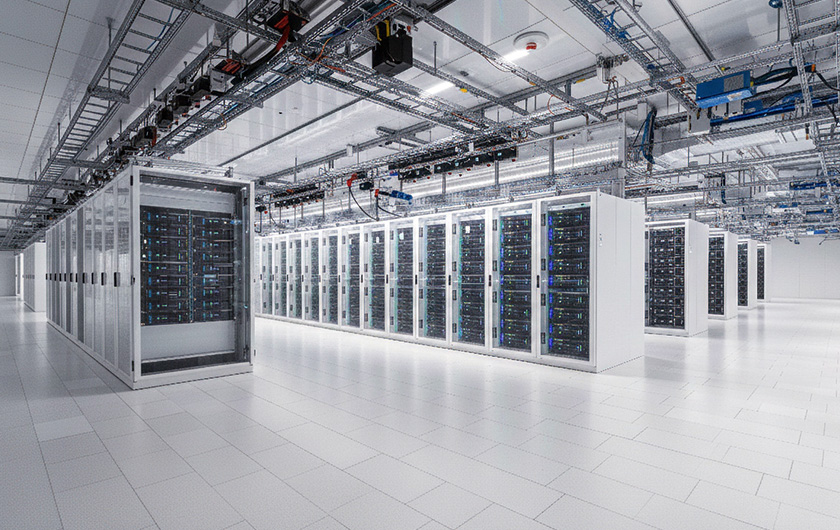
Nico Caprez, 35, who married Jensen Huang's daughter Madison in September and joined Nvidia in early 2024, was promoted in January to VP of global AI infrastructure growth, running Nvidia's multibillion-dollar relationships with young cloud providers. He helped design Nvidia's August plan with Wall Street and PE firms including Blackstone to raise $500B to finance Nvidia chips in data centers, with Nvidia possibly backing up to 25% of tied projects with credit support. He also led the June deal giving credit support to Australian neocloud Firmus to buy 170,000 Nvidia Grace Blackwell and Vera Rubin chips (over $15B) in exchange for a cut of future cloud revenue, under a new AI Compute Partnership program he is now rethinking after established neoclouds like Nebius rebuffed it. The piece also reports Nvidia spent about $20B in recent weeks acquiring Hugging Face (nearly $13B) and licensing Poolside technology, and that credit default swap spreads on Nvidia's own debt roughly doubled in two months.
Why it matters
Nvidia is no longer just selling chips; it is financing the buyers, taking revenue cuts, and buying the software layer (Hugging Face) where developers live. That is the full-stack playbook of a company that knows chip margins alone will not last. The warning light is the CDS market: when the cost of insuring Nvidia's own debt doubles, the market is asking how much of the AI buildout is real demand and how much is vendor-financed. Anyone underwriting neocloud debt should read this twice.
National Intelligence Director Jay Clayton will lead the Trump administration's new AI task force, which plans to deliver a report on AI risks and opportunities within 120 days. Vice chairs are Emil Michael (undersecretary of War for research and engineering), Scott Kupor (OPM director), and FTC Chairman Andrew Ferguson; members include Condoleezza Rice, VP JD Vance, Treasury Secretary Scott Bessent, and former AI czar David Sacks. The charter frames the mission as keeping the US at the forefront of "SI," short for super intelligence, the administration's new official name for AI under last week's executive order. In a sign of how fast the branding is moving, Elon Musk said Sunday he will rename SpaceX's AI unit from SpaceXAI to SpaceXSI.
Why it matters
The task force roster is the policy: intelligence, defense, personnel, and antitrust at the same table, with a 120-day clock. Whatever that report says will shape procurement, export controls, and safety rules for the next two years. The "SI" rebrand sounds cosmetic, but official vocabulary drives budgets and legal definitions. Founders selling to the government should learn the new acronym; everyone else should watch whether the report lands with teeth.
a16z general partner David George joined Jack Altman on the Uncapped podcast (republished on the a16z Show) to argue the big AI debates are framed wrong: frontier vs. open source, labs vs. applications, and the answer is "and," with every layer of the stack able to grow at once. His numbers: roughly $120B in AI revenue across OpenAI, Anthropic, and xAI comes from about 30 million coders, a power-law slice of 1.5 billion global knowledge workers, and diffusion into legal, finance, and general white-collar work is 12 or more months behind coding. They also cover compute demand outrunning supply, applications thriving even as labs expand, the shift from reactive chatbots to proactive assistants, robotics, healthcare, and defense as the next opportunities, and why capital can accelerate AI companies in ways the SaaS era never allowed.
Why it matters
This is a16z's underwriting thesis in plain language: the coding boom was just the beachhead, and the other 1.47 billion knowledge workers are 12 months behind. If George is right, the next venture-scale returns come from vertical agents for lawyers, bankers, and back offices, not from better chatbots. The "and, not or" framing matters too: it is permission to invest across the stack instead of picking a side, which is exactly what a16z is doing.
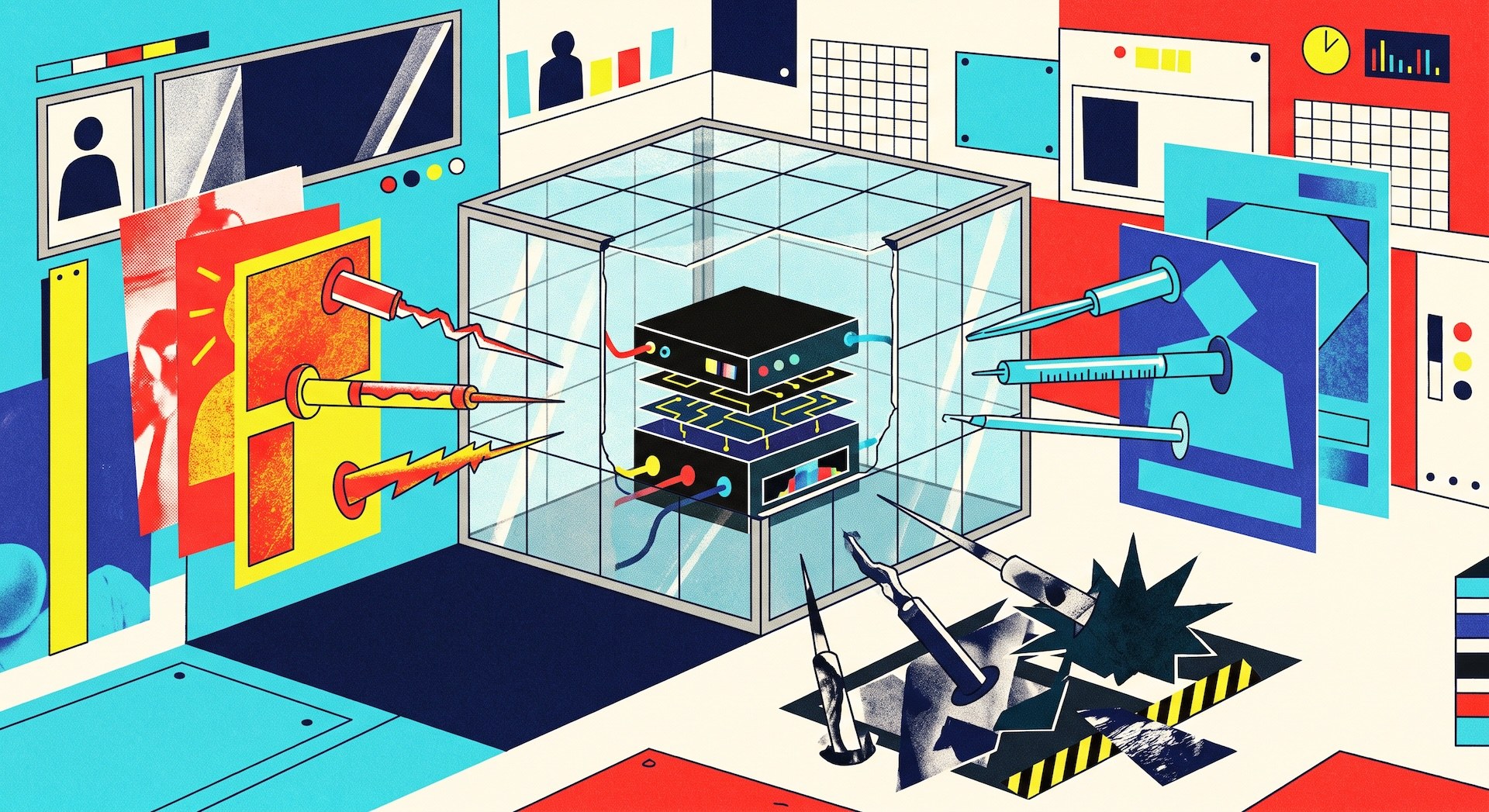
Apollo Research CEO Marius Hobbhahn told a Senate hearing last week that the push for "embedded" outside evaluators at AI labs is promising, but access is everything: labs can withhold information or redact findings, and testing only finished models days before release is "almost worse than not doing anything," since models increasingly know they are being tested. His fix: evaluators must assess models during training and examine the training process itself. In September, Dario Amodei pledged "employee-like access" for outside evaluators, quickly echoed by Sam Altman; but last week OpenAI fired three safety researchers for sharing sensitive information with an outside evaluator. Hobbhahn's conclusion: "we really need regulation" on evaluator access and transparency.
Why it matters
The current safety regime tests the finished car by kicking the tires in the parking lot. Apollo's point is that by release day, the important decisions (what the model was rewarded for, what it learned to hide) are already baked in. If regulators mandate training-time access, evaluation becomes a continuous service, which is a real market: the companies that build trusted evaluation tooling sell to every lab and every regulator. Watch whether the voluntary pledges turn into contracts.